

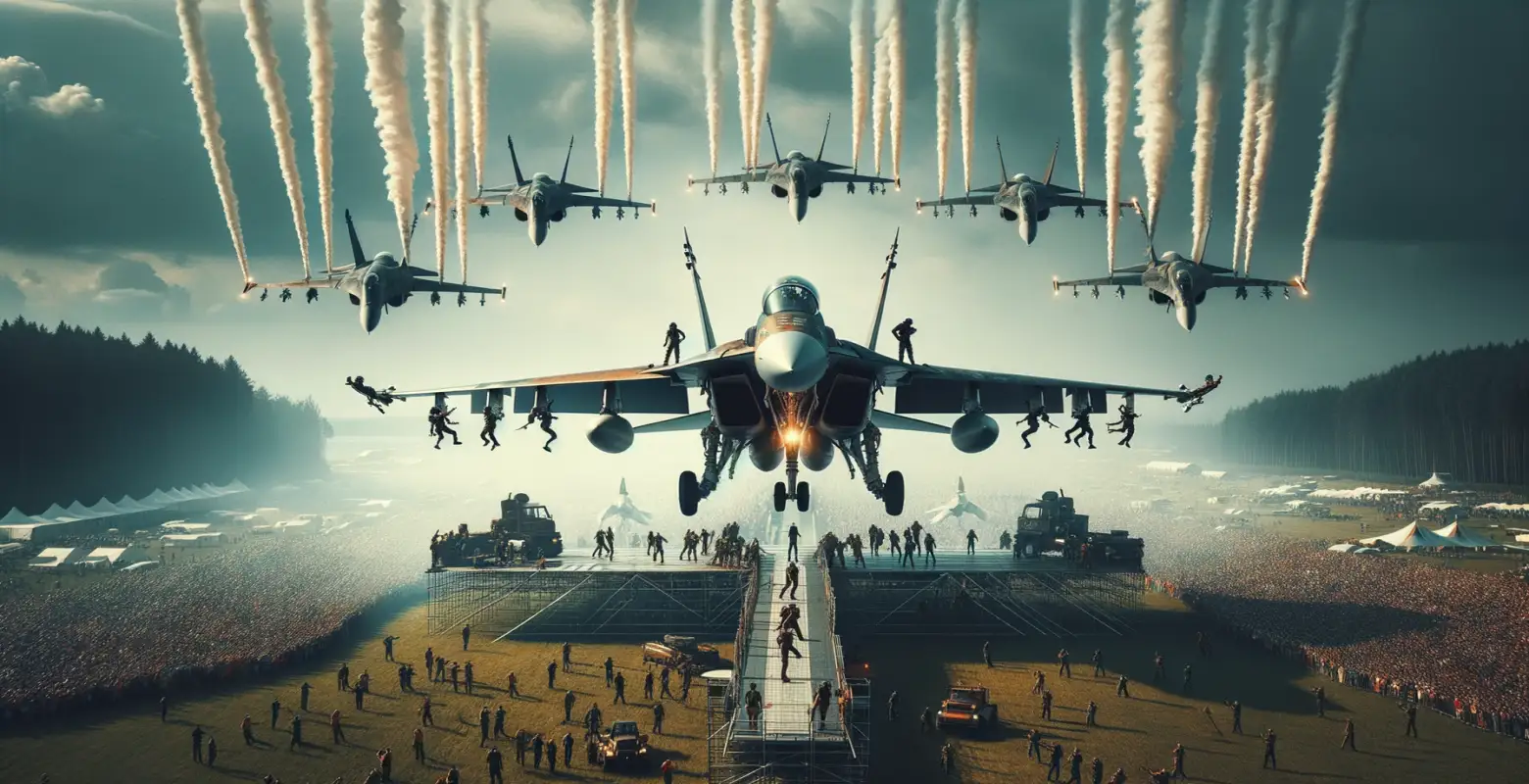
The most spectacular aerial operations in history
Introduction
Aviation operations play a crucial role in the history of wars, rescue missions, and humanitarian efforts. From World War II to the present day, aviation has transformed the way military operations are conducted, offering speed, precision, and range that were previously unattainable. In this article, we will examine the most spectacular aviation operations in history that not only changed the course of events but also shaped the future of military and civilian aviation. Why are these operations so important? Because they demonstrate how innovation and courage can surpass the limits of human capability and technology.
Operation Entebbe
Historical background: In June 1976, an Air France flight was hijacked by a group of terrorists and diverted to Entebbe in Uganda. The passengers, including many Israeli citizens, were held hostage.
Course of the operation: The Israeli Defense Forces carried out one of the most daring rescue operations in history. On the night of July 3-4, 1976, Israeli commandos landed at the Entebbe airport, neutralized the terrorists, and freed the hostages. The entire operation lasted only 90 minutes.
Significance and consequences: Operation Entebbe was not only a military success but also demonstrated Israel's determination in the fight against terrorism to the world. It proved that precise planning and courage can yield spectacular results.
Operation Desert Storm
Historical background: In 1991, after Iraq's invasion of Kuwait, an international coalition led by the USA launched Operation Desert Storm to liberate Kuwait.
Course of the operation: The operation began with a massive aerial bombardment aimed at destroying the Iraqi military infrastructure and air defenses. It was one of the largest air operations in history, involving thousands of aircraft and millions of tons of bombs.
Significance and consequences: Desert Storm showcased how modern technology, such as precision laser-guided bombs and stealth aircraft, can change the face of war. The operation was successful, and Kuwait was liberated in just a few weeks.
Operation Berlin Airlift
Historical background: After World War II, Berlin was divided into zones controlled by the Allies. In 1948, the Soviet Union blocked all land routes to West Berlin in an attempt to force its surrender.
Course of the operation: In response, the United States and United Kingdom initiated a massive airlift operation to deliver supplies by air. For nearly a year, thousands of aircraft transported food, coal, and other essential goods to the besieged city.
Significance and consequences: The Berlin Airlift was a triumph of logistics and political will, demonstrating that free nations would not succumb to blackmail. The operation was successful, and the blockade was lifted in 1949.
Operation Black Buck
Historical background: During the Falklands War in 1982, British air forces conducted a series of long-range bombing raids on Argentine positions on the islands.
Course of the operation: The Black Buck operations were among the longest bombing missions in history, involving flights with a range of over 12,000 km. They required complex aerial refueling and precise planning.
Significance and consequences: Although the effectiveness of the operations was debatable, they demonstrated the capability of the British aviation to conduct long-distance operations, impacting the development of future air strategies.
Operation Allied Force
Historical background: In 1999, NATO carried out Operation Allied Force to end the conflict in Kosovo and compel the withdrawal of Serbian forces from the region.
Course of the operation: The air campaign lasted for 78 days, during which NATO forces conducted thousands of airstrikes on Serbian military and infrastructure targets.
Significance and consequences: It was the first NATO operation conducted without a UN mandate, which sparked controversy. However, it ended successfully, with Serbian forces withdrawing from Kosovo, enabling the resolution of the conflict.
Summary
Aviation operations play a key role in shaping history, influencing the destinies of nations and altering the course of events. From daring rescue missions to complex military campaigns, aviation has proven its value as an indispensable element of modern military strategy. By analyzing these spectacular operations, we can better understand how technology and human courage can work together to overcome the greatest challenges. For future generations, these stories serve as a lesson in courage and innovation, inspiring subsequent generations to push the boundaries of possibility.



Number of comments: 0