

The latest trends in aviation training
Introduction
Aviation training plays a key role in ensuring safety, efficiency, and innovation in the aviation industry. As technology advances and regulatory requirements become more complex, aviation training must keep pace with these changes. In this article, we will look at the latest trends in aviation training aimed at adapting to the dynamically changing aviation environment. Why is this topic important? Because the way we train our pilots, engineers, and ground personnel directly impacts flight safety and operational efficiency.
Simulation Technology and Virtual Reality
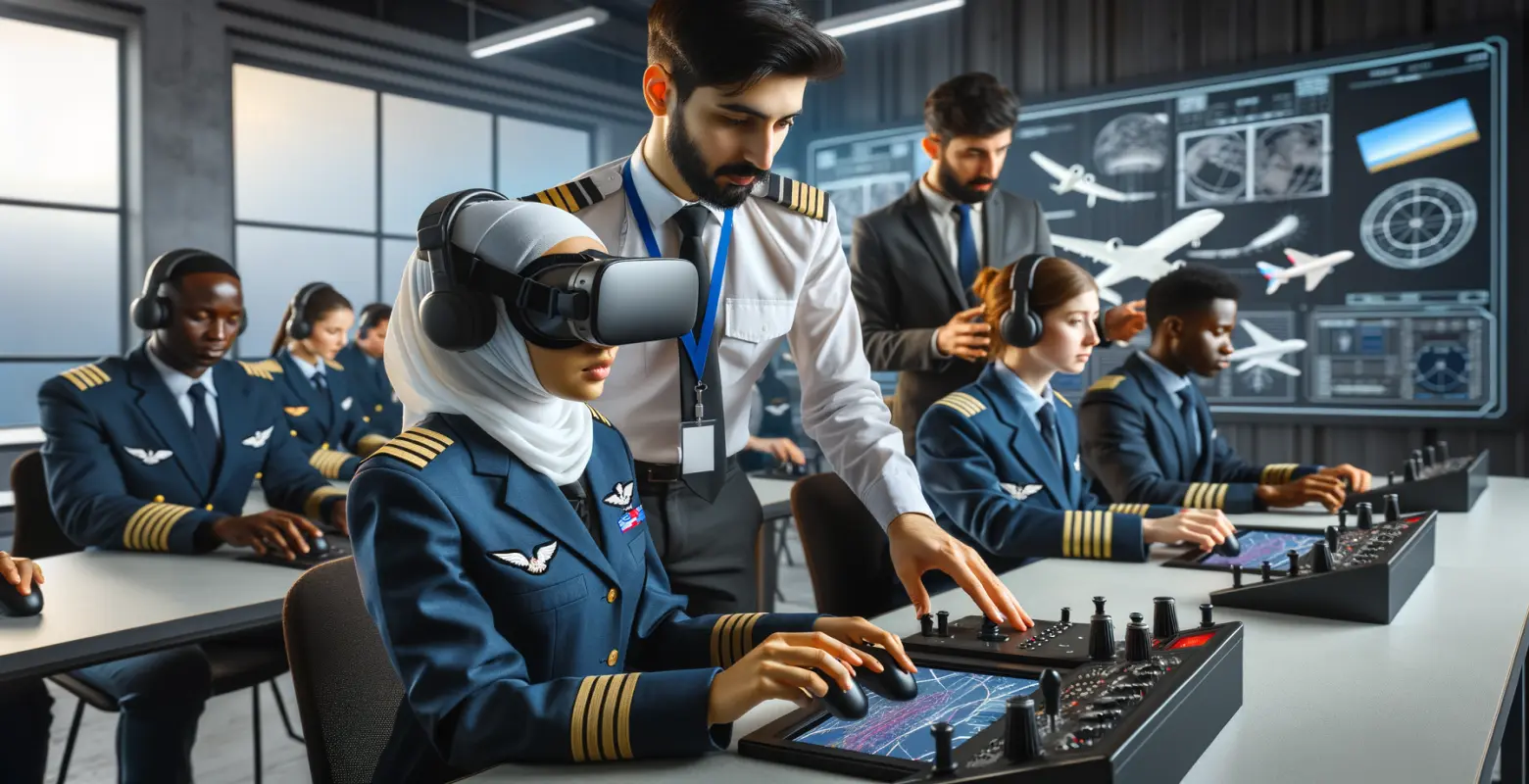
One of the most important trends in aviation training is the use of simulation technology and virtual reality (VR). Flight simulators have long been an integral part of training, but new technologies allow for even more realistic and interactive experiences. With VR, pilots can practice various flight scenarios in a safe and controlled environment.
Example: VR simulators are used to train pilots for engine failure or extreme weather conditions, which may have been less realistic in traditional simulators. Virtual reality allows immersion in situations that would be difficult to replicate in the real world, enhancing pilots' readiness and skills.
Training Personalization
Training personalization is another significant trend gaining importance. Through data analysis and machine learning, training can be tailored to the individual needs and skills of participants. This approach enables more effective learning and faster knowledge acquisition.
Example: Training platforms can analyze participants' progress and suggest additional exercises or materials based on their results and needs. This makes training more effective, allowing participants to focus on areas that need improvement.
Online and Remote Training
The COVID-19 pandemic has accelerated the development of remote forms of education, including aviation training. Many airlines and training institutions have invested in e-learning platforms that enable training from anywhere in the world.
Example: Aviation schools now offer online theoretical courses that previously required physical presence in classrooms. This allows students to flexibly adjust their learning to their own schedules, which is especially important for working individuals.
Integration with Artificial Intelligence Systems
Artificial intelligence (AI) is increasingly playing a role in aviation training. AI algorithms can analyze flight data, simulations, and tests to provide valuable feedback that helps identify areas needing improvement.
Example: AI can be used to analyze data from simulations, identifying behavioral patterns that may lead to errors. This allows instructors to better understand which skills need further development in individual pilots.
Safety and Regulatory Compliance
Safety is a priority in the aviation industry, and training must comply with the latest international regulations. New regulations often require updates to training programs, posing a challenge for many organizations.
Example: Aviation organizations must regularly update their training programs to account for changing safety and environmental protection regulations. This requires continuous monitoring of regulations and investment in new training technologies.
Challenges and Future Development Directions
Despite the numerous benefits brought by new technologies and approaches, aviation training also faces many challenges. The costs associated with implementing modern technologies, the need for constant updating of training materials, and integrating new methods with traditional approaches are just some of them.
However, the future of aviation training appears promising. The possibilities offered by technological advancements, including the Internet of Things (IoT) and even more advanced VR and AR systems, have the potential to revolutionize how we train future pilots and aviation personnel.
Summary
Aviation training is undergoing dynamic transformations aimed at adapting to new technological challenges and requirements. The use of virtual reality, personalized learning, online training, and integration of artificial intelligence are just some of the trends shaping the future of this industry. It is crucial for these changes to be implemented thoughtfully and in accordance with applicable regulations to ensure the highest level of safety and efficiency in aviation. We encourage further monitoring of these trends and investment in modern training methods that can benefit both training participants and the entire aviation industry.


Number of comments: 0