The role of drones in inspecting critical infrastructure
Introduction
The modern world is constantly striving for automation and optimization of processes in various areas of life. Faced with increasing urbanization and the development of critical infrastructure such as energy, water, and transportation networks, there is a need for effective monitoring and inspection. In this context, drones have become invaluable tools, offering new possibilities that would be difficult to achieve with traditional inspection methods. Their use in inspecting critical infrastructure contributes to increased safety, efficiency, and cost savings. In this article, we will examine the role of drones in this process, analyzing their benefits, challenges, and future prospects.
History and Development of Drone Technology
Drone technology, also known as unmanned aerial vehicles (UAV), has its roots in the 1960s when they began to be developed for military purposes. Over time, they gained popularity in the civilian sector, and their applications expanded significantly. Currently, drones are used in many industries, from agriculture to the film industry, and their role in critical infrastructure is becoming increasingly important.
Technological advancements have enabled the development of drones with various capabilities, including long flight times, long ranges, precise navigation, and advanced camera technology. These features attract the attention of companies involved in critical infrastructure, which need tools for precise inspection and monitoring.
Benefits of Using Drones in Inspecting Critical Infrastructure
Efficiency and Cost Savings
One of the main advantages of drones is their ability to conduct inspections faster and cheaper than traditional methods. Drones can reach hard-to-access areas, such as tall towers or power lines, without the need for costly and time-consuming methods like crane rentals or scaffolding construction.
Safety
The use of drones in inspecting critical infrastructure enhances the safety of workers. By being able to operate in potentially hazardous environments, the risk of accidents related to working at heights or in hard-to-reach places is reduced. Drones can also monitor areas at risk of explosion or contamination, minimizing risks to people.
Accuracy and Data Quality
Drones equipped with modern cameras and sensors can provide high-quality images and data crucial for accurate infrastructure analysis. They can capture images in various spectra, such as infrared, allowing for the detection of problems invisible to the naked eye.
Challenges Associated with Drone Use
Legal Regulations
One of the main challenges associated with using drones in inspections is compliance with legal regulations. In many countries, drone flight regulations are strict, which can hinder their use in inspecting critical infrastructure. Operators must obtain appropriate permits and licenses, which can be time-consuming and costly.
Technical Limitations
Despite technological advancements, drones still have limitations such as flight time, range, or resistance to weather conditions. Depending on the mission's specifics, some drones may not be able to conduct inspections in challenging weather conditions or over long distances.
Data Security
Inspecting critical infrastructure using drones also poses challenges regarding data security. The transmitted images and information must be adequately protected from unauthorized access, requiring the use of advanced encryption and data protection technologies.
The Future of Drones in Inspecting Critical Infrastructure
Development of AI and Machine Learning Technologies
In the future, drones are expected to be increasingly equipped with artificial intelligence and machine learning technologies, allowing for even more precise and autonomous execution of inspection tasks. This will enable them to independently analyze collected data and identify potential problems with greater accuracy.
Integration with Other Technologies
Drones will be increasingly integrated with other systems, such as the Internet of Things (IoT) or data management systems, allowing for a more comprehensive approach to monitoring infrastructure. This will enable the creation of complex, integrated systems that will facilitate faster responses to potential failures or threats.
Expansion of Applications in Various Sectors
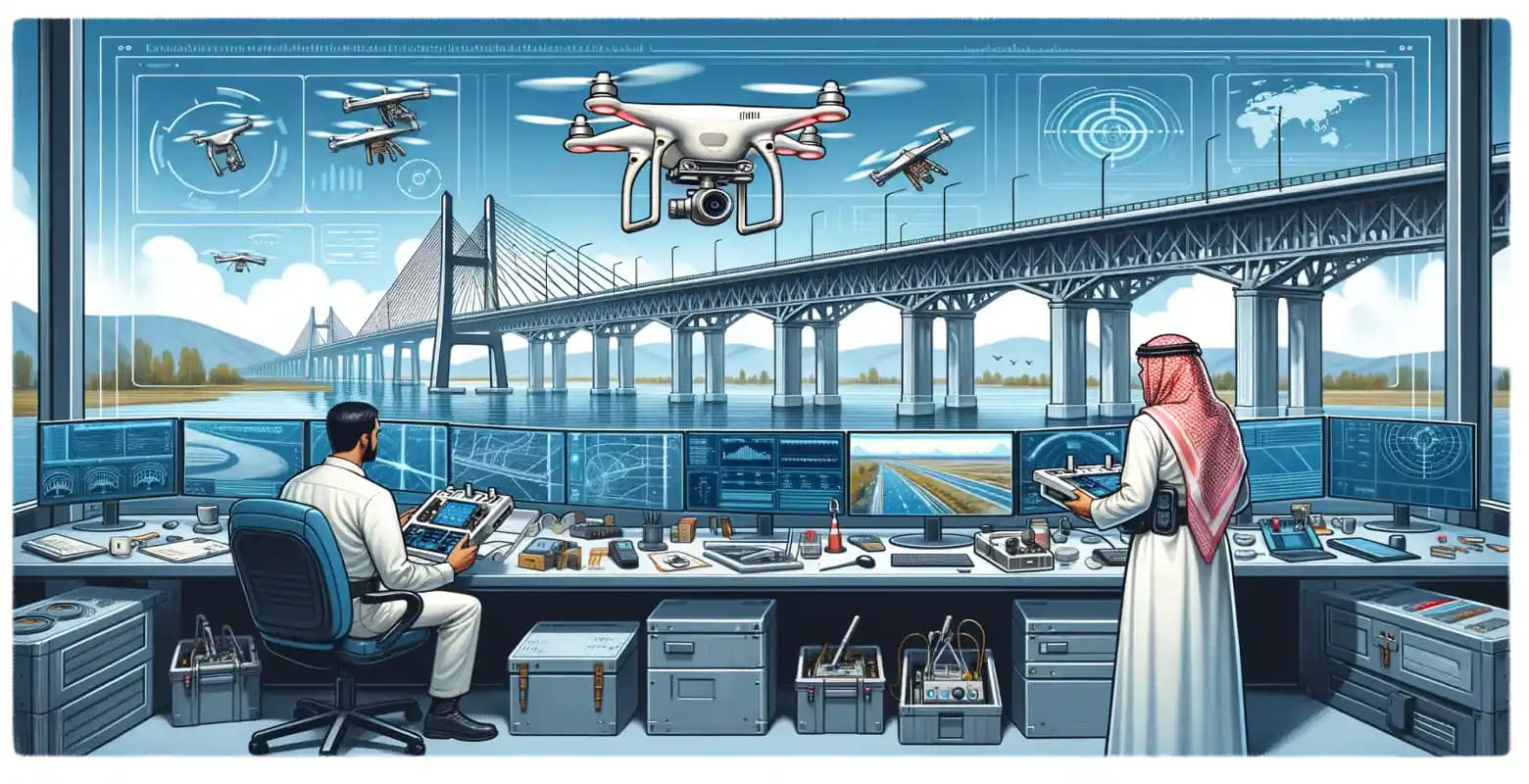
The use of drones in inspecting critical infrastructure will expand to other sectors such as renewable energy, transportation, or construction. Drones can monitor wind farms, inspect bridges or buildings, contributing to increased efficiency and safety in these industries.
Summary
Drones play an increasingly significant role in inspecting critical infrastructure, offering many benefits such as efficiency, safety, and data accuracy. Despite existing challenges, such as legal regulations or technical limitations, their future seems promising, especially in the context of AI and IoT technology development. Drones are a key element of future infrastructure management and protection strategies, and their applications will only expand, bringing benefits to both operators and society as a whole. It is worth following the development of this technology and considering the possibility of its implementation in various aspects of managing critical infrastructure.