

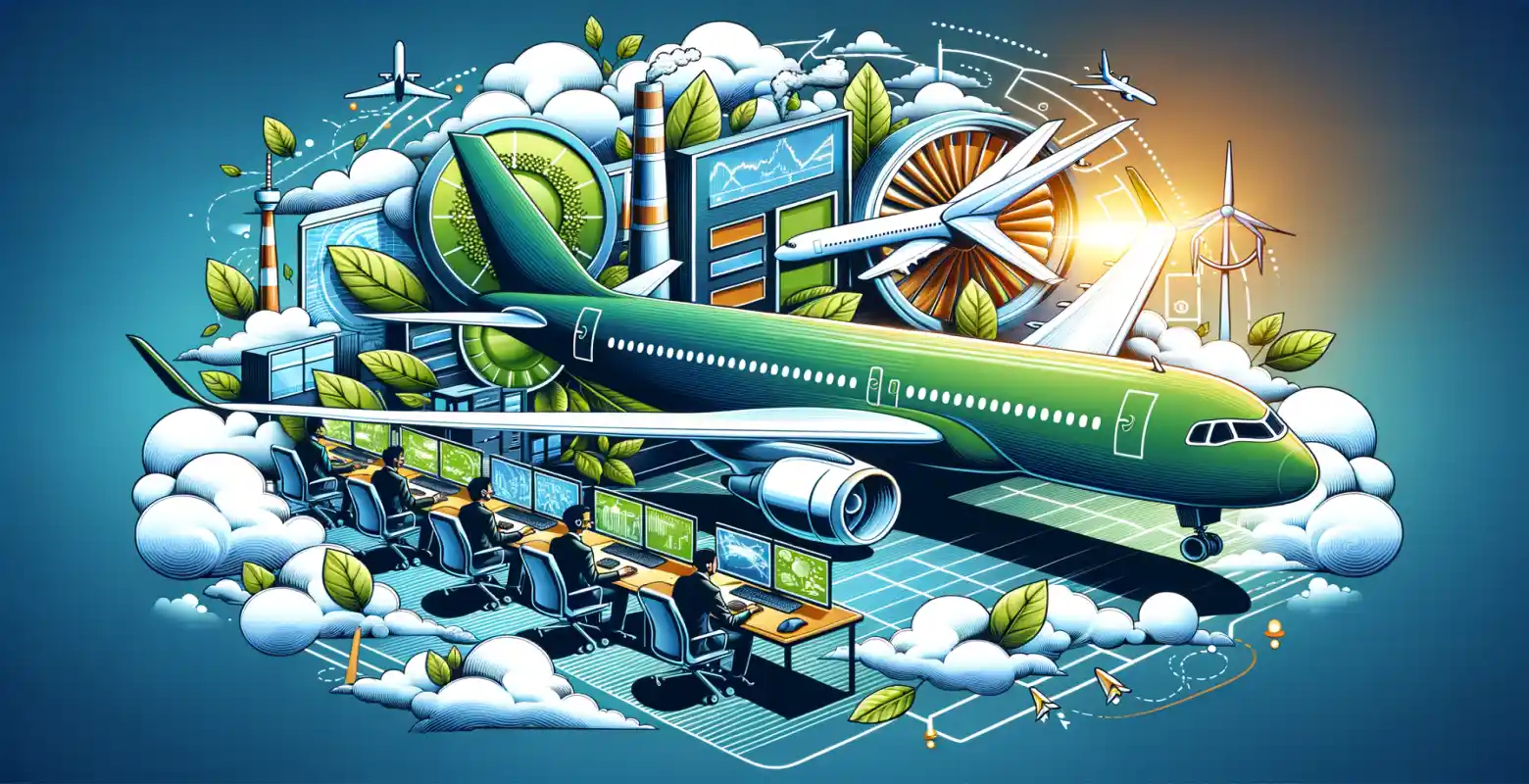
Climate and air transport - what actions are airlines taking to combat CO2 emissions?
Introduction
Climate and air transport – a topic that is gaining importance in the face of global challenges related to climate change. Aviation, although not the largest source of greenhouse gas emissions, is a significant element in the global CO2 emissions balance. Therefore, airlines worldwide are taking steps to reduce their carbon footprint. Why is this so important and what actions are being taken in this field? In this article, we will take a closer look at the issue of CO2 emissions in air transport and the solutions aimed at minimizing them.
The Impact of Air Transport on Climate
Aviation accounts for about 2.5% of global CO2 emissions. Although this may seem like a small percentage at first glance, it is worth noting that this sector is one of the fastest-growing in terms of passenger numbers and flights, leading to an increase in emissions on a global scale. Additionally, aviation emissions have a particular impact on the climate because they occur at altitudes where their greenhouse effect can be intensified by other atmospheric phenomena.
CO2 Emission Reduction Technologies
In response to growing concerns about climate change, many airlines are investing in new technologies. Next-generation aircraft such as the Boeing 787 Dreamliner or Airbus A350 are more fuel-efficient, resulting in lower CO2 emissions. Modern composite materials and more aerodynamic designs help reduce air resistance and fuel consumption.
Another step is the development of biofuels for aviation, which are produced from renewable sources such as vegetable oils or organic waste. Biofuels can reduce CO2 emissions by up to 80% compared to traditional aviation fuel. Airlines like KLM and Lufthansa are already testing biofuel blends on regular routes.
Operational Optimization
Not only new technologies contribute to emission reduction, but also changes in aviation operations. Optimization of flight routes allows for shorter distances between airports, directly reducing fuel consumption. Air traffic management systems, such as SESAR in Europe or NextGen in the USA, introduce more precise and efficient air traffic management.
Take-off and landing procedures are another area of optimization. The implementation of Continuous Descent Approaches (CDA) helps reduce fuel consumption during landing, leading to lower emissions.
Emission Offsetting
One of the solutions gaining popularity is CO2 emission offsetting. This works by investing in projects that reduce emissions elsewhere, such as afforestation or renewable energy sources. Offset programs are offered by airlines like British Airways and easyJet, allowing passengers to voluntarily finance such initiatives.
International Cooperation
The global nature of aviation requires international cooperation. The International Civil Aviation Organization (ICAO) has introduced the CORSIA program (Carbon Offsetting and Reduction Scheme for International Aviation), which aims to stabilize CO2 emissions at the 2020 level through offset mechanisms and operational efficiency.
In addition, airlines affiliated with the International Air Transport Association (IATA) have committed to achieving carbon neutrality by 2050, which is an ambitious goal requiring broad cooperation and innovation.
Challenges and the Future
Despite the actions taken, the aviation sector faces many challenges. High costs of implementing new technologies and alternative fuels are a barrier for many carriers. Moreover, the development of biofuel infrastructure and legal regulations in different countries may delay progress.
However, the future looks promising, thanks to innovations such as electric and hybrid aircraft, which are currently in the prototype phase. The development of hydrogen fuel cell technologies can also revolutionize the aviation industry in the coming decades.
Summary
Climate and air transport is a topic of crucial importance in the context of global environmental challenges. Airlines are taking various actions to reduce CO2 emissions, from investing in new technologies to international cooperation within programs like CORSIA. While the challenges are immense, the direction is clear – the aviation industry is striving for sustainable development.
For passengers, this means the opportunity for more informed choice of airlines and participation in offset programs. For the industry, it entails the need for further innovation and adaptation to changing regulations and societal expectations.



Number of comments: 0