

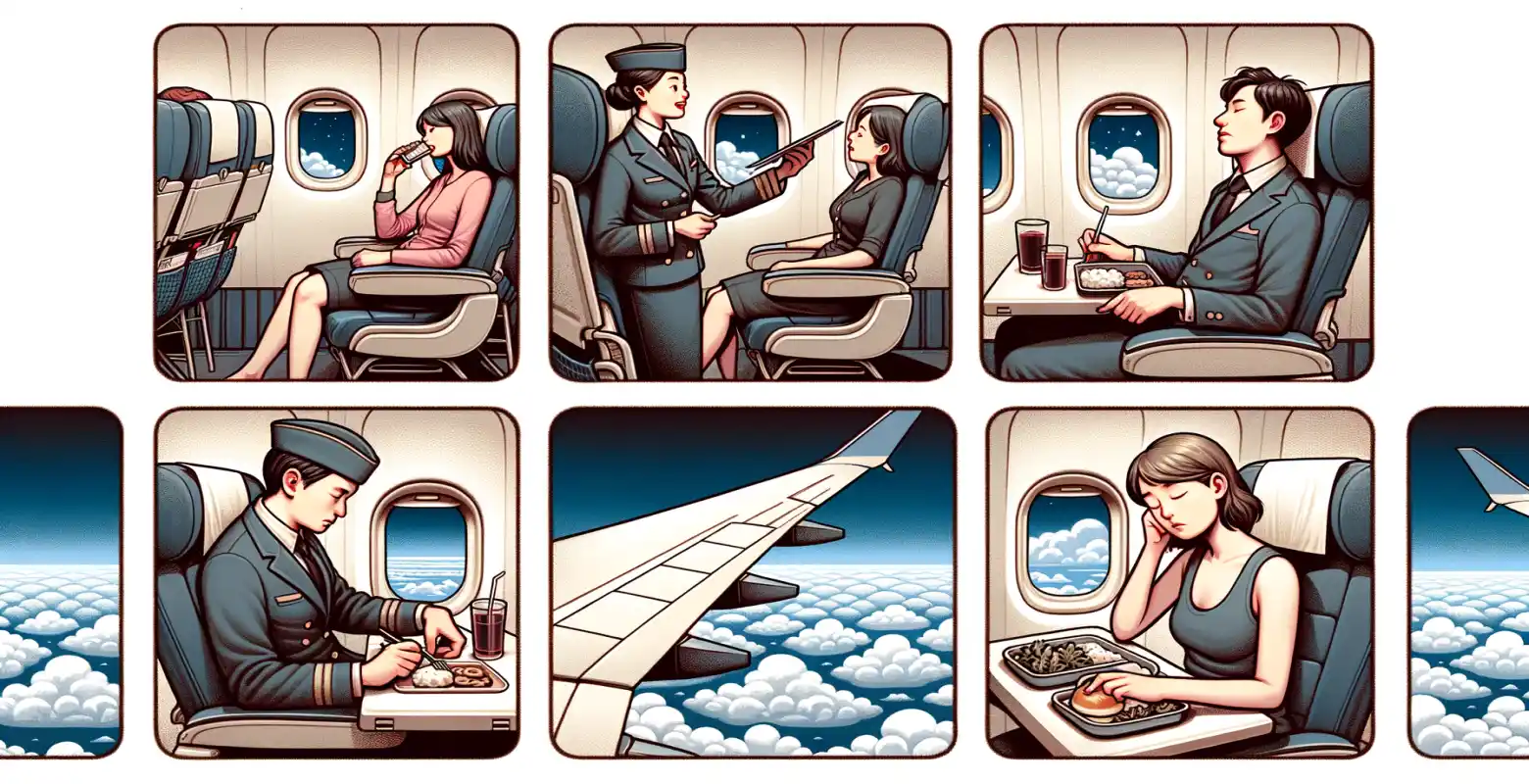
What are the challenges associated with long-haul flights?
Introduction
Long-haul flights play a crucial role in global mobility, enabling fast travel between continents. In the era of globalization and the increasing significance of international trade and tourism, the importance of these flights is hard to overstate. However, despite the invaluable benefits they bring, long-haul flights come with a set of challenges. In this article, we will take a closer look at these challenges that affect both passengers and airlines. Understanding these issues is key to improving travelers' experiences and airlines' operational efficiency.
Health Challenges for Passengers
Extended hours spent in the air can have a negative impact on passengers' health. Primarily, prolonged immobility in tight seating spaces can lead to deep vein thrombosis. This is a condition where dangerous blood clots can form in the legs, potentially leading to serious health complications such as pulmonary embolism. To prevent this, it is recommended to regularly stand up and move around the cabin, wear loose clothing, and drink an adequate amount of water.
Another issue is jet lag, a disruption of the circadian rhythm caused by crossing multiple time zones in a short period. It manifests as fatigue, insomnia, and concentration problems. Adapting to a new time zone can take several days, which is particularly challenging for business travelers who need to be fully functional upon arrival.
Environmental Impact
Aviation is one of the sectors of the economy that significantly contributes to greenhouse gas emissions. Long-haul flights, due to the length of the route and time spent in the air, generate substantial amounts of carbon dioxide. Environmental organizations and governments worldwide are increasingly focusing on the need to reduce emissions in this sector. Airlines are compelled to invest in modern technologies, such as more fuel-efficient engines and lighter aircraft materials, to decrease their carbon footprint.
Technical and Operational Aspects of Long-Haul Flights
Long-haul flights require precise planning and advanced operational management. One of the main challenges is fuel logistics management. Aircraft must carry enough fuel to reach their destination, increasing their weight and affecting fuel consumption. Therefore, finding a balance between the amount of fuel carried and flight route optimization is crucial.
Another aspect is the necessity of monitoring the aircraft's technical condition. Long-haul flights put more strain on the machines, making regular technical inspections and servicing essential to ensure the safety of passengers and crew.
Financial Challenges for Airlines
Long-haul flights are costly to operate, stemming from high fuel costs, airport fees, and the need to maintain an advanced fleet of aircraft. Airlines must constantly balance between maintaining competitive ticket prices and generating profits. The extended flight time and longer distances mean that delays and other unforeseen circumstances can have significant financial consequences.
To meet these challenges, many airlines invest in new management and route optimization technologies, enabling more efficient flight planning and operational cost reduction.
Passenger Comfort and Satisfaction
Passenger comfort is a key element influencing their satisfaction with the journey. On long-haul flights, airlines strive to provide the best conditions, offering comfortable seats, extensive in-flight entertainment systems, and diverse meals. Nevertheless, limited space and long hours spent in seats can be uncomfortable for many passengers.
Airlines implement various solutions to improve travel comfort, such as enhanced air conditioning systems, better noise insulation, and increased seat adjustability. Additionally, the development of premium economy class, offering more space and better services, addresses passengers' growing expectations.
The Future of Long-Haul Flights
With technological advancements, long-haul flights are expected to become more efficient and environmentally friendly. Innovations in new propulsion systems, such as hybrid or electric aircraft, can significantly reduce carbon dioxide emissions. Additionally, the development of hypersonic technologies can shorten flight times, further enhancing travel comfort.
Moreover, the increasing importance of sustainable development and ecology may prompt airlines to introduce more stringent emission and fuel consumption standards. Investments in research and development in this area will be crucial for the future of long-haul aviation.
Summary
Despite numerous challenges, long-haul flights remain an essential element of the modern world. Health, technical, operational, financial, and environmental challenges require continuous adaptation and innovation from airlines. With technological progress and growing ecological awareness, the future of long-haul flights appears promising. Further research and investments in new technologies will be crucial for reducing the negative environmental impact and improving passenger experiences. For passengers, this means greater comfort and safety, and for airlines, improved operational efficiency and compliance with environmental standards.



Number of comments: 0