

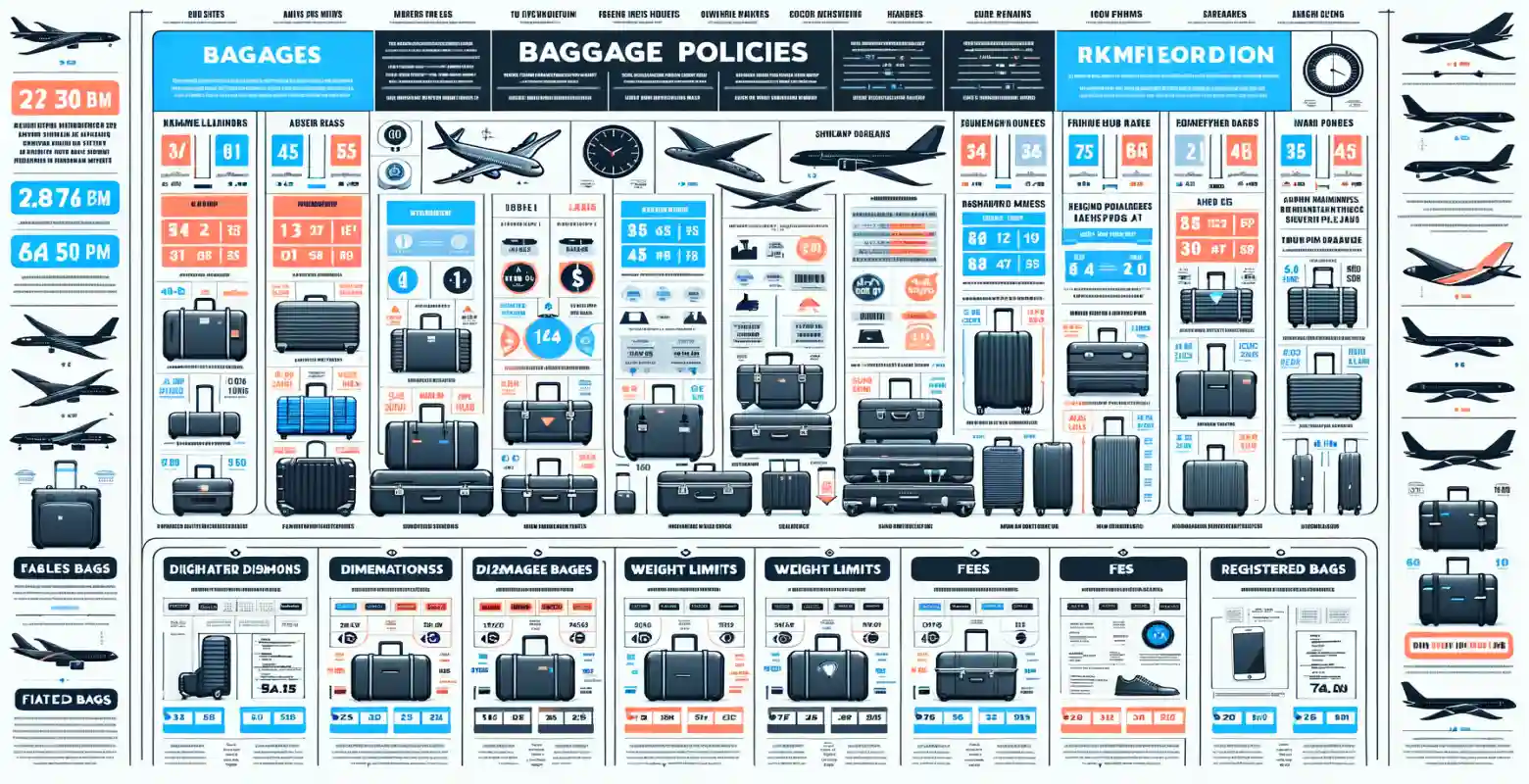
What are the rules for transporting checked baggage on different airlines?
Introduction
Traveling by plane is a routine for many people and a unique opportunity for others to explore the world. Regardless of how often we fly, we always have to deal with one of the key aspects of travel — checked baggage. The rules regarding the transport of checked baggage vary depending on the airline, route, and class of travel. Knowledge of these rules is essential to avoid unpleasant surprises at the airport, such as additional fees or the need to repack. In this article, we will look at the rules that apply to different airlines and why it is important to stay up to date on this topic.
Basic rules for transporting checked baggage
Each airline has its own regulations regarding checked baggage, which may depend on various factors such as booking class, flight duration, or travel destination. Typically, passengers in economy class can expect a smaller amount of free baggage than those traveling in higher classes. The standard in many airlines is the free transport of one piece of baggage weighing between 20 to 23 kilograms, although this is not a rule that applies everywhere.
Weight and dimensions of baggage: The weight of checked baggage is usually limited to 23 kg, but in some cases, it may be higher for passengers traveling in business or first class. The dimensions of the baggage are also important, although airlines usually focus more on the weight. It is important to carefully check the baggage transport conditions on the carrier's website before traveling.
Differences between airlines
Differences in baggage rules can be significant, and below are a few examples:
Ryanair: This Irish carrier is known for its restrictive baggage rules. In the standard fare, checked baggage is often not included, and an additional fee is required for each piece of baggage. The weight of a single baggage cannot exceed 20 kg.
LOT Polish Airlines: The national carrier of Poland usually offers 23 kg of checked baggage within the ticket in economy class on international routes. For business class, this is usually 32 kg.
Lufthansa: The German airline allows the transport of one piece of baggage weighing up to 23 kg in economy class, while in business class, two pieces of baggage weighing up to 32 kg each can be transported.
Trends and changes in baggage transport
Recent years have brought many changes in baggage transport rules. Carriers are increasingly introducing Light fares that do not include checked baggage, forcing passengers to pay an additional fee or limit themselves to carry-on baggage. In response to the growing demand for affordable travel, many carriers offer a wide range of paid baggage options that allow passengers to tailor the service to their needs.
Challenges related to baggage transport
One of the main challenges for passengers is understanding the variety of rules that apply to different airlines. Frequently changing regulations can lead to misunderstandings and additional costs. It is important for passengers to be aware that not complying with weight and size regulations of baggage can result in significant additional fees.
Benefits and advantages of understanding baggage rules
Understanding the rules for transporting checked baggage helps avoid stress and additional costs at the airport. Proper planning also allows for a comfortable journey without worrying about exceeding baggage limits. For frequent travelers, this can also lead to savings through better packing management and choosing the right ticket fares.
The future of checked baggage transport
In the future, we can expect further changes in checked baggage transport, related to the growing competition in the airline market. These changes may include new technologies, such as smart suitcases with built-in scales, to help passengers better manage the weight of their baggage. Additionally, the evolving policy of sustainable development may encourage airlines to introduce more environmentally friendly transport options, which could affect baggage rules.
Summary
Transporting checked baggage is an essential element of planning air travel. Understanding the rules that apply to different airlines helps avoid unpleasant surprises and additional costs. It is worth regularly checking the current regulations and offers of carriers to optimally plan your journey. This will not only make traveling more comfortable but also more economical. Remember to always check the baggage transport conditions before purchasing a ticket, allowing for informed and thoughtful decisions regarding travel.


Number of comments: 0