

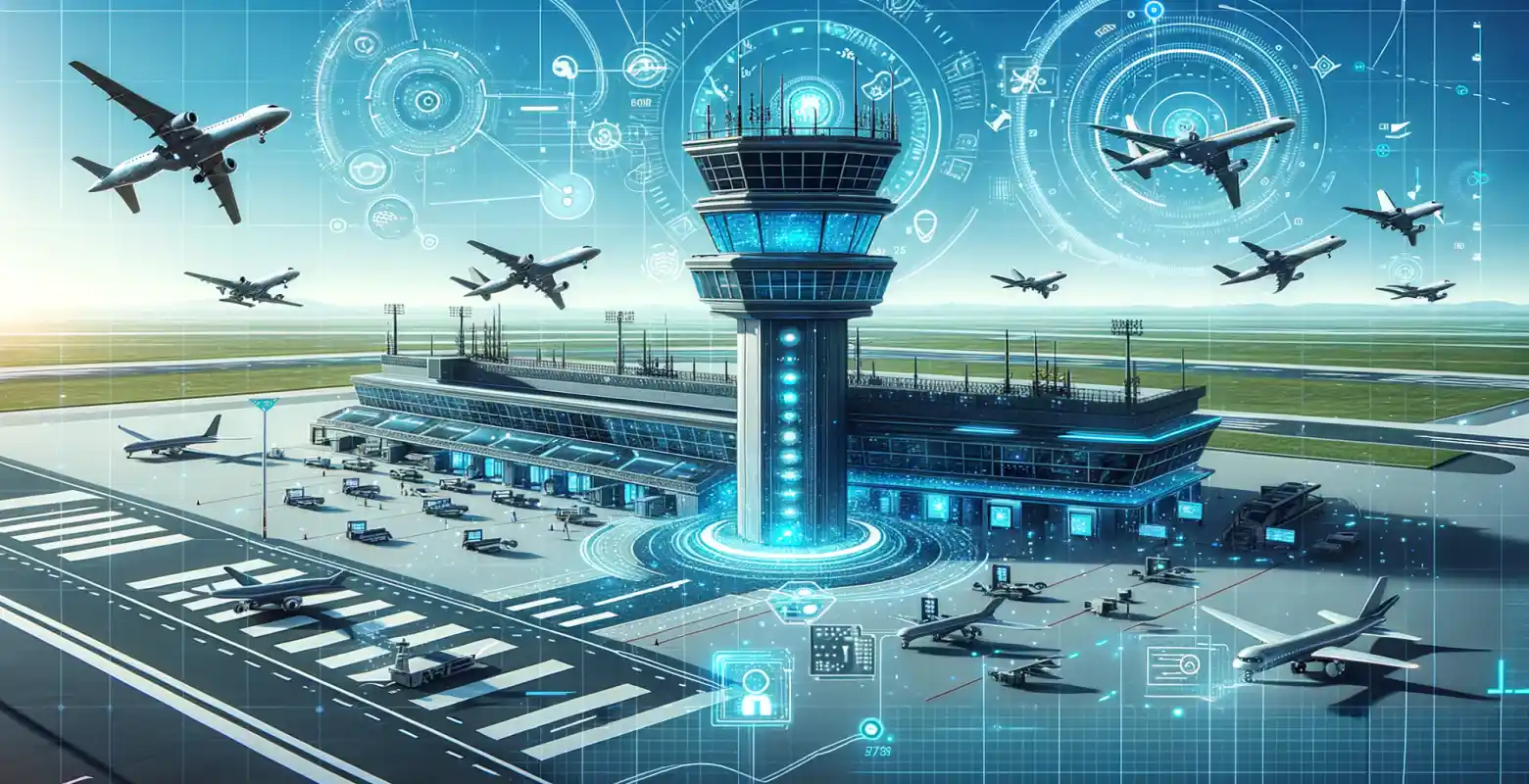
What are the new technologies in air traffic management at airports?
Introduction
Air traffic management at airports is a complex process that requires advanced technologies and precise coordination. In recent years, the development of modern technologies has significantly changed the way air traffic is controlled, affecting efficiency, safety, and passenger comfort. The increasing number of flight connections and higher environmental protection requirements make innovations in this field not only desirable but necessary. In this post, we will look at the latest technologies used in air traffic management and their impact on airport operations.
Modern Air Traffic Management Systems
One of the key elements of air traffic management is the Air Traffic Management (ATM) systems. Traditional radar-based systems are gradually being replaced by modern solutions that utilize satellite data and digital communication technologies. Systems such as ADS-B (Automatic Dependent Surveillance-Broadcast) enable precise tracking of aircraft positions in real-time, significantly enhancing the safety and efficiency of flight operations.
ADS-B allows for the transmission of accurate information about the aircraft's location and altitude directly to other aircraft and ground stations, enabling better coordination and reducing the risk of collisions. The implementation of this technology is crucial, especially in areas with high traffic volume, such as Europe or North America.
Intelligent Airport Management Systems
Airports worldwide are implementing intelligent management systems that utilize artificial intelligence and data analysis to optimize operations. Technologies such as Airport Collaborative Decision Making (A-CDM) enable better cooperation among various entities at the airport, such as airlines, air traffic control, and ground services.
A-CDM allows for more efficient resource planning and management, resulting in reduced waiting times for take-off and landing, fewer delays, and lower fuel consumption by aircraft. Through the analysis of large data sets, these systems can predict and respond to changing operational conditions in real-time.
Advanced Communication Technologies
Effective communication is a key element of air traffic management. Modern technologies, such as Data Comm, replace traditional voice communication methods, enabling the transmission of text data between air traffic controllers and pilots. This not only reduces the risk of misunderstandings but also increases the speed and accuracy of information exchange.
The introduction of Data Comm technology reduces the burden on communication bandwidth and improves operational efficiency. As a result, controllers can more easily manage a higher number of aircraft, which is crucial given the constantly growing air traffic.
Automation and Robotization of Airport Processes
Modern airports are increasingly turning to automation and robotization to increase operational efficiency and improve passenger experiences. Automated baggage systems, passenger service robots, and autonomous baggage transport vehicles are just some of the solutions being implemented at airports worldwide.
Automation of processes allows for shorter passenger handling times, reduced risk of human errors, and increased airport throughput. In the context of the COVID-19 pandemic, contactless technologies such as automated biometric gates have gained importance, contributing to the enhanced health safety of travelers.
Environmentally Friendly Technologies
Faced with growing concerns about the environmental impact of air transport, airports and airlines are investing in technologies that help reduce greenhouse gas emissions and energy consumption. Modern ground traffic management systems, such as green landing corridors, optimize flight trajectories, reducing fuel consumption.
Additionally, more airports are utilizing renewable energy sources, such as solar panels, to meet their energy needs. This not only reduces carbon footprint but also lowers operational costs.
Challenges and Future Development Directions
While new technologies in air traffic management bring many benefits, their implementation also poses certain challenges. One of the main issues is the need to harmonize systems at the international level, requiring cooperation between different countries and aviation organizations.
Another challenge is cybersecurity. With the increasing digitization of airports and air traffic management systems, there is a risk of cyberattacks that could disrupt their operations. Developing effective strategies to protect against such threats is crucial to ensuring the continuity and safety of flight operations.
In the future, we can expect further development of technologies such as artificial intelligence and machine learning, which will play an increasingly important role in air traffic management. Automation and integration of new solutions with existing systems will be key to further improving the efficiency and safety of airports worldwide.
Summary
Air traffic management at airports is currently undergoing dynamic changes thanks to the introduction of new technologies. Systems like ADS-B, A-CDM, and Data Comm are revolutionizing how air traffic is controlled, enhancing safety, efficiency, and travel comfort. Automation and environmentally friendly technologies allow for operational cost reduction and environmental impact mitigation.
Facing the increasing number of flight connections and environmental challenges, innovations in air traffic management are essential. In the future, further refinement and integration of new solutions will be crucial to meet the demands of the contemporary aviation world. Reader, we encourage you to follow these fascinating changes and explore the possibilities that new technologies bring.



Number of comments: 0