

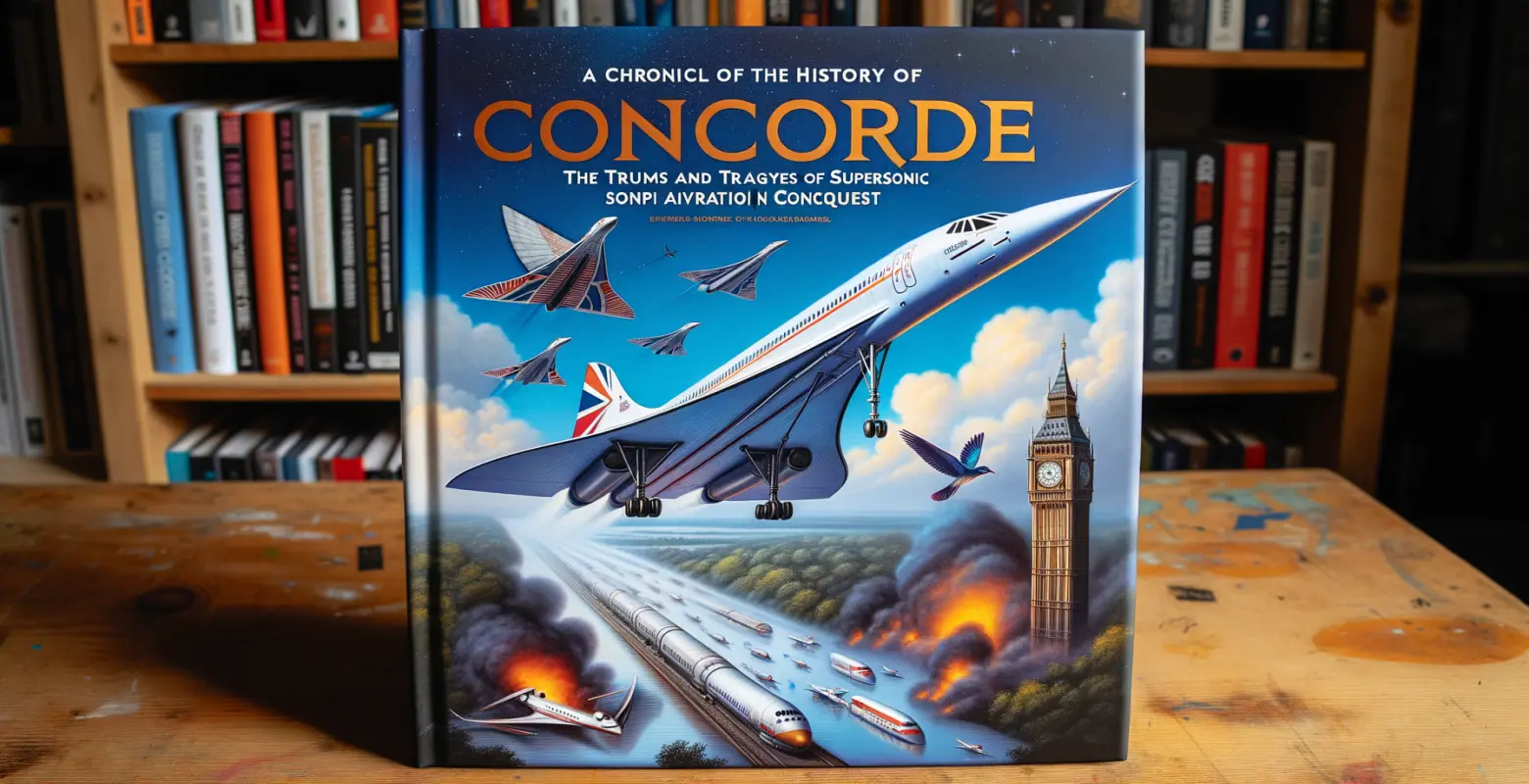
The History of Concorde: Triumph and Tragedy of Supersonic Aviation Conquest
The history of aviation is full of remarkable achievements and moments that revolutionized the way we travel. One of the most iconic symbols of the 20th century was the Concorde - the first supersonic passenger aircraft, which for three decades was synonymous with luxury and speed. Concorde not only redefined aviation standards but also became a symbol of technological progress and international cooperation. Its story is a tale of innovation, rivalry, and ultimately - downfall.
**The Beginnings of Concorde: A Milestone in Aviation**
The Concorde was born out of a dream for faster transatlantic travel. In the 1950s and 1960s, civil aviation was developing rapidly, and intercontinental travel became more accessible. Aircraft such as the Boeing 707 and Douglas DC-8 paved the way, but designers' ambitions reached further - they wanted to create a machine that could cover the distance between New York and Paris in half the time. Thus, the concept of a supersonic passenger aircraft was born.
The Concorde project was the result of cooperation between Great Britain and France, two countries that decided to combine their technical and financial resources to create an aircraft for the future. In 1962, an agreement was signed to build the Concorde prototype, aimed at revolutionizing transatlantic travel. It was an example of pioneering international cooperation in the aviation industry.
**Concorde's Technology: Unprecedented Innovations**
The Concorde was a plane full of groundbreaking technologies. Its delta-shaped aerodynamic design allowed it to reach speeds of over 2 mach, more than twice the speed of sound. It was the first passenger aircraft to regularly fly at supersonic speeds - up to 2,180 km/h. The wing structure, using fly-by-wire technology, and incredibly strong materials allowed for safe operations at such high speeds and altitudes.
The Rolls-Royce/Snecma Olympus 593 engines were another key element of Concorde's success. Thanks to them, the aircraft could soar at an altitude of 18 kilometers, where air resistance was minimal, and the maximum speed was higher. However, supersonic technology required precise temperature management, as during the flight, the aircraft's fuselage heated up to 127 degrees Celsius. These design challenges made the Concorde one of the most advanced aircraft ever built.
**Luxury Onboard and Exclusive Connections**
The Concorde not only impressed with its speed but also with the comfort of travel. With just 100 seats on board, passengers were provided with luxurious conditions, making flying on the Concorde an elite experience. The routes it served were mainly transatlantic connections, linking London and Paris with New York and Washington. A flight from London to New York took only 3.5 hours - half the time compared to traditional aircraft. However, tickets were extremely expensive, limiting access to Concorde travel mainly to wealthy passengers and corporate clients.
**Financial Challenges and the Paris Catastrophe**
Despite impressive technology and success among the elite, Concorde struggled with financial challenges from the outset. The cost of its construction was astronomical - the total cost of the program is estimated at around 1.3 billion pounds. Additionally, the oil crisis in the 1970s made Concorde operations costly, and rising fuel prices affected the profitability of flights.
A real blow for Concorde was the disaster on July 25, 2000, when an Air France aircraft crashed shortly after takeoff from Charles de Gaulle Airport in Paris. Due to a tire failure, which damaged the fuel tank, the Concorde caught fire and crashed into a hotel near the airport. 113 people died in the crash. Although it was the only Concorde accident, this event had a huge impact on public opinion and led to a temporary suspension of flights.
**The End of the Concorde Era**
In 2003, after over 27 years in service, Concorde was retired. The decision to end flights was made due to rising maintenance costs, declining passenger numbers, and difficulties in upgrading technology. The final Concorde flight took place on October 24, 2003, when a British Airways aircraft landed at Heathrow Airport, thus ending one of the most extraordinary eras in aviation history.
Although the Concorde no longer flies the skies, its legacy remains alive. It was an aircraft that revolutionized transatlantic travel and became a symbol of technological progress. Its unique shape and capabilities still evoke admiration, and the concept of supersonic passenger flights is slowly returning to favor through new projects, such as Boom Supersonic, which aim to create the successor to Concorde.
**Contemporary Supersonic Aspirations**
Despite the end of the Concorde era, the aviation world has not given up on dreams of supersonic travel. In recent years, projects have emerged aiming to reintroduce this technology for use. Boom Supersonic and projects by companies such as Aerion Corporation are working on new aircraft that can bring back supersonic passenger flights. This time, however, the goal is not only speed but also sustainable development. The new aircraft are intended to be more energy-efficient and environmentally friendly, which could make them more affordable and accessible to a larger number of passengers.
The story of the Concorde is a fascinating tale of ambitions, innovations, and challenges that accompanied this supersonic pioneer. Its legacy inspires subsequent generations of engineers, pilots, and aviation enthusiasts who dream of returning to the era of supersonic travel.


Number of comments: 0