

History of Polish military aviation
Introduction
The history of Polish military aviation is a fascinating subject that reflects the technological development, social changes, and geopolitical challenges of the 20th and 21st centuries. From the early aviation experiments to contemporary high-tech units, military aviation in Poland has a rich and dynamic past. Understanding this history not only helps to appreciate the achievements of Polish technical thought, but also holds the key to understanding the significance of air forces in safeguarding the country's sovereignty. In this article, we will look at the key moments and figures that have shaped Polish military aviation over the years.
Beginnings of Polish Military Aviation
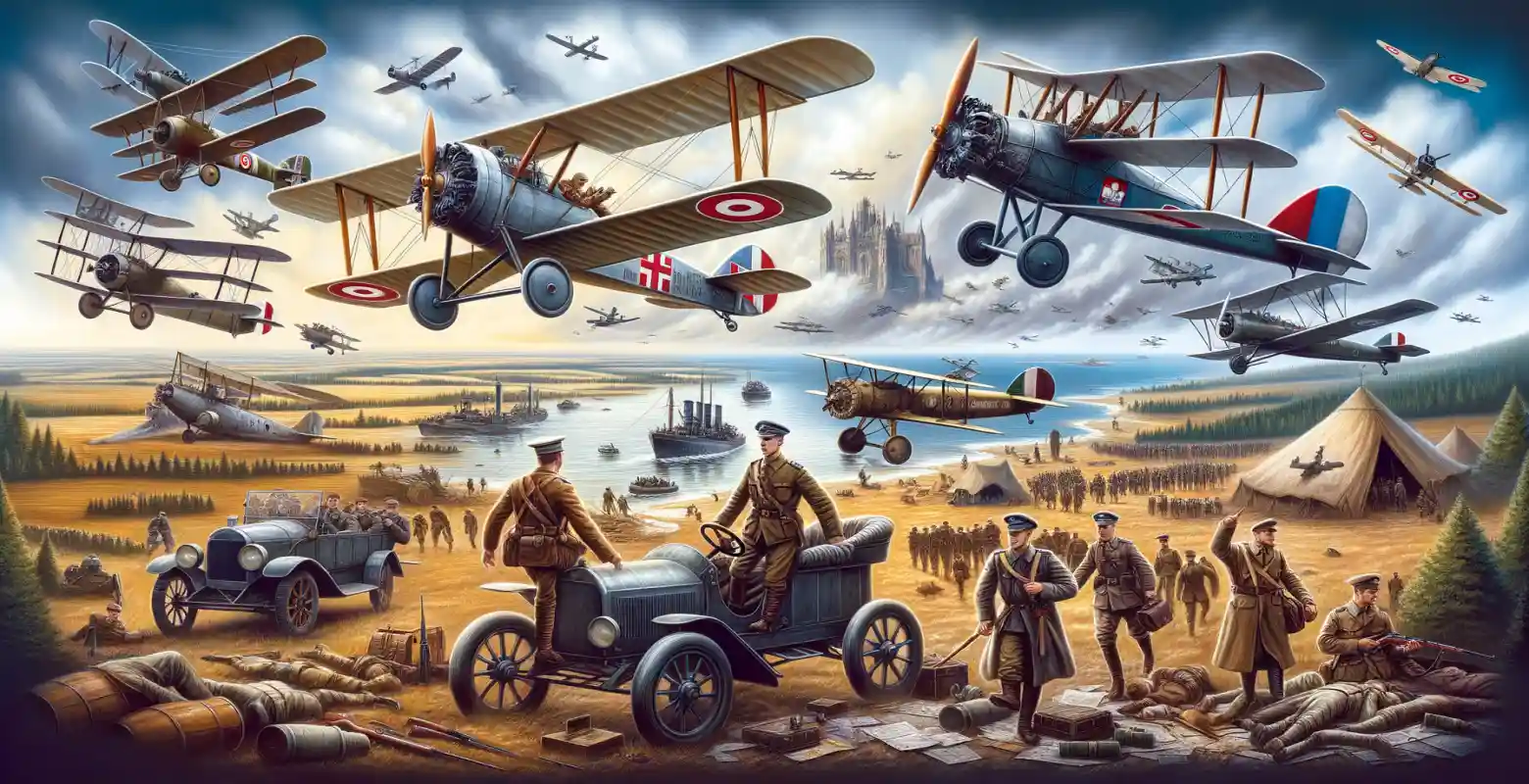
Polish military aviation emerged at the beginning of the 20th century, when aviation as a field of technology and military science was just beginning to develop. The first mentions of aviation in Poland date back to the period before World War I, when Polish engineers and enthusiasts began experimenting with airplanes. However, the formal establishment of Polish military aviation occurred only after regaining independence in 1918.
In 1918, following the end of World War I, Poland began to build its armed forces, including the air force. The first aviation units were formed from aircraft captured from occupying forces and those purchased abroad. Key figures such as Gen. Józef Haller and Eng. Stanisław Skarżyński played crucial roles as pioneers in organizing military aviation.
Military Aviation in the Second Polish Republic
The interwar period was a time of intense development for Polish military aviation. In the 1920s and 1930s, Poland invested in the development of its own aviation industry. This period saw the establishment of facilities such as PZL (State Aviation Works), which produced modern designs for that era, such as the PZL P.11 fighter aircraft.
The Polish aviation school gained international recognition thanks to the achievements of pilots like Franciszek Żwirko and Stanisław Wigura, who won the prestigious Challenge International des Avions de Tourisme competition in 1932. The air force of the Second Polish Republic was well-developed, but faced technological and political challenges in the 1930s that prevented a full modernization of its fleet before the outbreak of World War II.
Polish Aviation during World War II
The outbreak of World War II in 1939 met Polish aviation in the midst of reorganization and modernization. Despite this, Polish pilots demonstrated exceptional courage and skills during the September campaign. While Polish aviation could not halt the German invasion, pilots and aircraft crews evacuated to France and then to Great Britain, where they continued the fight.
Many Polish pilots distinguished themselves during the Battle of Britain in 1940, flying as part of the 303 Warsaw Fighter Squadron named after Tadeusz Kościuszko, which became one of the most effective RAF fighter squadrons. Their contribution was invaluable, and the bravery and determination of Polish airmen were recognized by the British command and society.
Post-War Period and Political Changes
After the end of World War II, Polish military aviation had to navigate a new, communist reality. From 1945 to 1989, Poland was part of the Eastern Bloc, which meant close cooperation with the USSR and reliance on Soviet military technology.
The Polish People's Army Aviation was equipped with Soviet fighters such as the MiG-15, MiG-21, and Su-22. During this period, the training of Polish pilots and the development of aviation infrastructure were closely supervised by Moscow. Nevertheless, Polish pilots maintained a high level of training and professionalism, and Poland was a key member of the Warsaw Pact.
Transformation and Modern Times
After the fall of communism in 1989, Polish military aviation faced new challenges related to political transformation and integration with Western military structures. Poland initiated the modernization process of its armed forces, including aviation.
Poland's accession to NATO in 1999 was a milestone that necessitated adapting standards to the Alliance's requirements. As part of the aircraft fleet modernization, Poland acquired multi-role F-16 fighters, enabling the air forces to perform tasks in line with NATO standards.
Challenges and Future of Polish Military Aviation
Contemporary military aviation in Poland faces a series of challenges. Modernizing equipment and infrastructure, training a new generation of pilots, and adapting to rapidly changing threats are key tasks for the coming years.
One of the main challenges is the continued modernization of the air fleet. Introducing new aircraft such as the F-35 into service will require significant financial investments and proper personnel preparation. Moreover, the development of unmanned aerial vehicles (drones) opens up new possibilities and presents further challenges to Polish military aviation.
Summary
The history of Polish military aviation is a tale of determination, innovation, and courage. From humble beginnings to modern air forces, Polish aviation has played a crucial role in defending the country and building its position on the international stage. The future brings new challenges but also opportunities that can strengthen Poland's position as a significant player in international security. For readers interested in further exploring this fascinating history, we recommend following the latest trends and events related to Polish military aviation, which will undoubtedly shape the future of this field.


Number of comments: 0