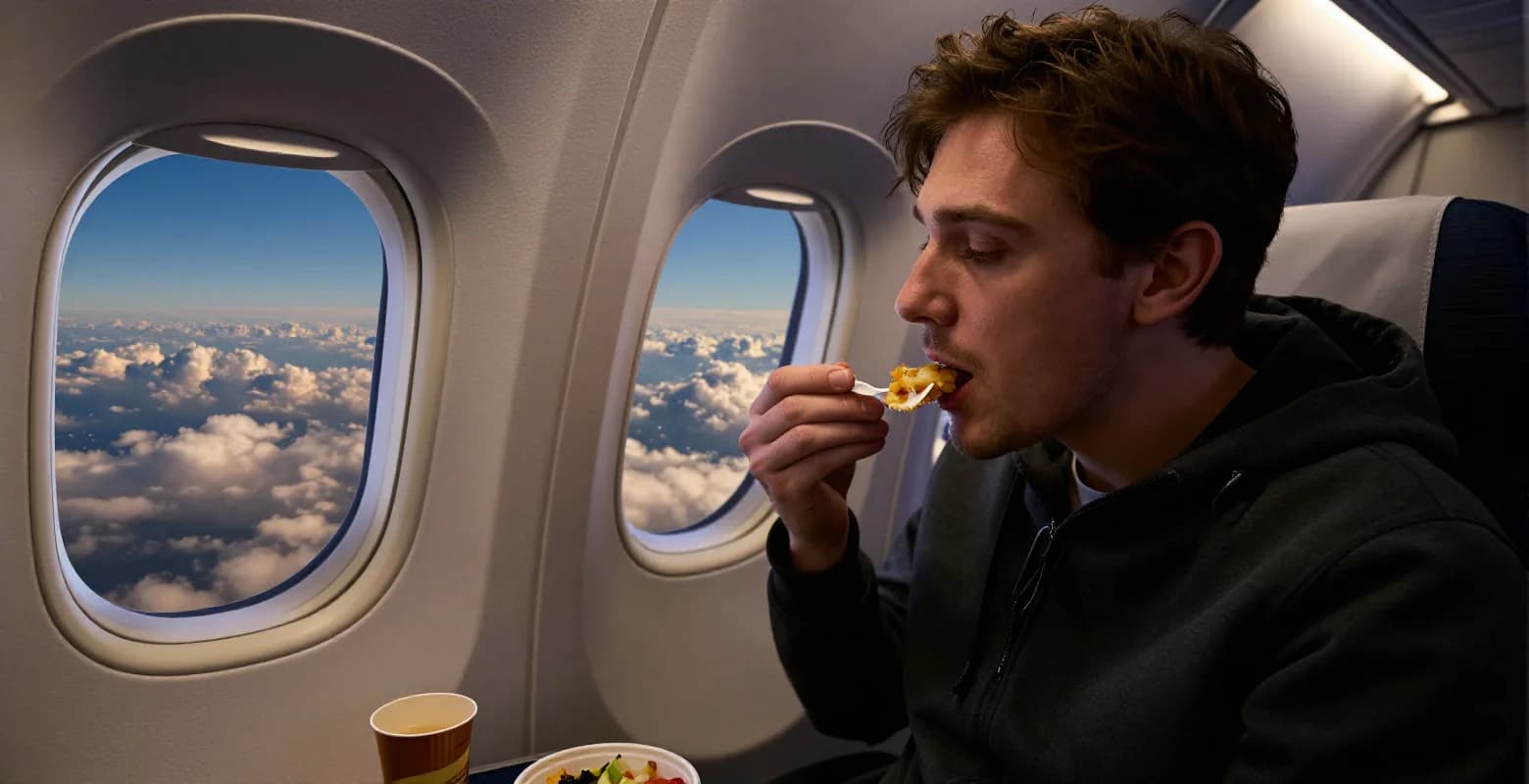
Why does airplane food taste different? The impact of altitude on our senses during flight
Introduction
Traveling by airplane is not just about getting from point A to B, but also a unique sensory experience. Have you ever wondered why the meals served on board often seem less flavorful than those eaten on the ground? The answer lies in the unique conditions at high altitude that significantly affect our senses.
The cruising altitude of commercial airplanes typically ranges from 10,000 to 12,000 meters above sea level. At these altitudes, atmospheric pressure drops to about one-third of the value at sea level, and temperatures can plummet to as low as -50°C. These extreme environmental factors have a direct impact on passengers' perceptions of taste and smell.
Physiology of the senses in flight conditions
Our sense of taste is closely linked to smell. Under normal conditions, about 80-90% of what we perceive as flavor is actually the scent of food molecules reaching receptors in our nose. At high altitude, taste buds on the tongue become less sensitive for several reasons:
- Reduced humidity: The air in the airplane cabin is very dry (humidity around 10-20%), leading to the drying of mucous membranes and a decrease in the ability to transmit taste signals.
- Electrolyte imbalance: Dehydration caused by dry air and low pressure disrupts nerve conduction in taste buds.
- Reduced receptor activity: Low temperatures and fluctuating pressure can temporarily "sedate" some taste receptors.
Additionally, the sense of smell heavily depends on the proper functioning of the nose. At high altitude, the mucous membranes in the nose may swell due to pressure changes (known as "cabin fever"), which hinders airflow and limits the ability to detect odors.
Airline strategies for sensory challenges
Aware of these limitations, airlines employ various culinary strategies:
- Flavor enhancement: Meals are often seasoned more heavily with salt and pepper, and include flavor-enhancing ingredients (e.g., umami from monosodium glutamate).
- Optimal temperatures: Dishes are served at an optimal temperature—neither too hot nor too cold—to maximize the limited perception of taste.
- Moist environments: Some airlines use special food packaging techniques to preserve moisture and aroma.
- Choice of ingredients: Dishes with intense flavors and aromas (e.g., cheeses, cured meats, spicy seasonings) are preferred.
Interestingly, some premium airlines even test special cabin air mixtures enhanced with scent molecules!
Impact on the culinary industry and future innovations
Understanding the impact of altitude on passengers' senses opens new possibilities for the entire aviation and culinary industries:
- Meal personalization: The ability to offer different flavor options based on passenger preferences.
- Technological innovations: Development of climate control systems in the cabin that could compensate for adverse sensory conditions.
- Scientific research: In-depth studies on the physiology of the senses at high altitudes could lead to new discoveries in nutrition.
- Staff education: Training for flight attendants on the optimal serving of meals in flight conditions.
Prospects and challenges
Despite progress, the aviation industry faces several challenges:
- Individual differences: Taste perception varies greatly among passengers, making menu standardization difficult.
- Technological limitations: Current climate control systems on airplanes have their limits and cannot completely negate the effects of altitude.
- Costs: Innovative sensory solutions are often expensive and challenging to implement on a large scale.
- Regulations: Any modifications to the cabin atmosphere must meet stringent safety standards.
However, the growing awareness of these issues and technological advancements offer hope for better culinary experiences during flights in the future.
Conclusions
The experience of eating on an airplane is a fascinating example of the interaction between human physiology and technology. Although current flying conditions present challenges to our senses, scientific progress and technical innovations are gradually improving the quality of meals on board. As the aviation industry evolves, we can expect increasingly sophisticated culinary strategies that will allow passengers to enjoy a full range of flavors even at high altitudes.