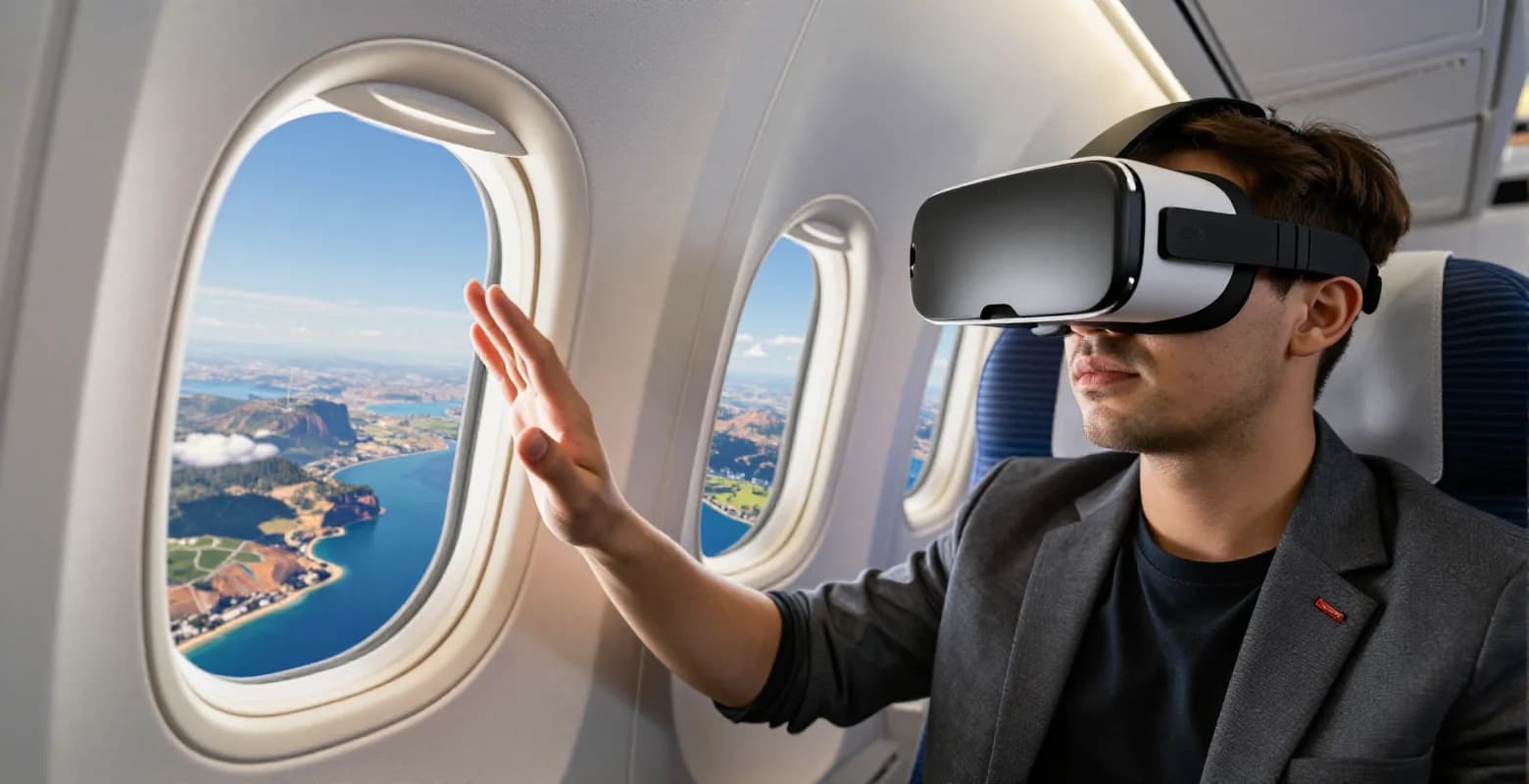
The Impact of VR Technology on Air Travel: A Revolution in Passenger Experiences
Introduction
Virtual reality (VR) technology has been conquering various sectors of the economy for years, and the aviation industry is no exception. From training pilots to enhancing passengers' time - VR is becoming a key tool in transforming experiences related to air travel.
In 2023, airlines such as Emirates and Qatar Airways introduced VR systems that allow passengers to virtually explore their destination cities before landing. This is just the beginning - experts estimate that by 2025, the VR market in aviation will reach a value of 1.2 billion dollars.
Pilot Training: Next-Generation Simulators
One of the most groundbreaking applications of VR in aviation is advanced training simulators. With these, pilots can practice complex maneuvers, system failures, or landings in extreme weather conditions in a safe, controlled environment.
An example is the Boeing Flight Simulator XR, which uses VR goggles to replicate the cockpit with remarkable accuracy. These simulators reduce training costs by 30-40% compared to traditional methods while increasing the realism of training.
Passenger Experiences: From Entertainment to Immersion
For the average passenger, VR means a whole new dimension of travel. Systems like the Airbus VR Cockpit Experience allow for a virtual flight above the clouds, offering views unavailable from a passenger seat.
Airlines are also experimenting with VR as a stress-reduction tool. Meditation apps in VR, available during Lufthansa flights, help passengers relax before landing.
Impact Analysis on the Industry
- Advantages: Increased safety through better-trained pilots, reduced training costs, new revenue sources from VR services for passengers.
- Challenges: High implementation costs of the technology, the need for standardization of solutions between airlines, concerns about passenger data privacy.
- Key Technologies: Next-generation VR headsets (e.g., Oculus Quest 3), 6DoF motion tracking systems, cloud platforms for real-time data processing.
- Examples of Applications: Virtual airport tours before arrival (Singapore Airlines), emergency evacuation training in VR (British Airways), interactive guides to destinations.
Prospects and Challenges
The future of VR in aviation depends on overcoming technological and regulatory barriers. IATA is working on safety standards for VR systems in cockpits, while equipment manufacturers strive to reduce the weight and cost of headsets.
A key challenge remains the integration of VR with existing onboard systems. According to an SIA report, 65% of airlines plan to implement VR solutions by 2027, but only 30% currently have the appropriate IT infrastructure.
Conclusions
VR technology is irrevocably changing aviation - from training to passenger experiences. Although the path to widespread adoption is still long, innovations such as immersive simulators and virtual guides demonstrate that VR will become a standard in modern airlines. The question is not 'if,' but 'how quickly' carriers will adopt these solutions on a mass scale.