The Most Technologically Advanced Airports in the World: The Future of Air Infrastructure
Introduction
Airports have always been a key element of the global transport network, but in the era of digitization and automation, they are becoming true technological hubs. Over the past decade, the world's largest airports have undergone a revolution - from smart traffic management systems to autonomous vehicles serving passengers, to advanced biometric solutions. This not only facilitates travel but also redefines security and operational efficiency.
According to an IATA report from 2023, global air traffic will increase by 4% annually by 2035. To meet these challenges, airports are investing billions of dollars in future technologies - from artificial intelligence to the Internet of Things (IoT). An example is Changi Airport in Singapore, which is already recognized as the most innovative in the world.
Technological Breakthroughs: From AI to Robotics
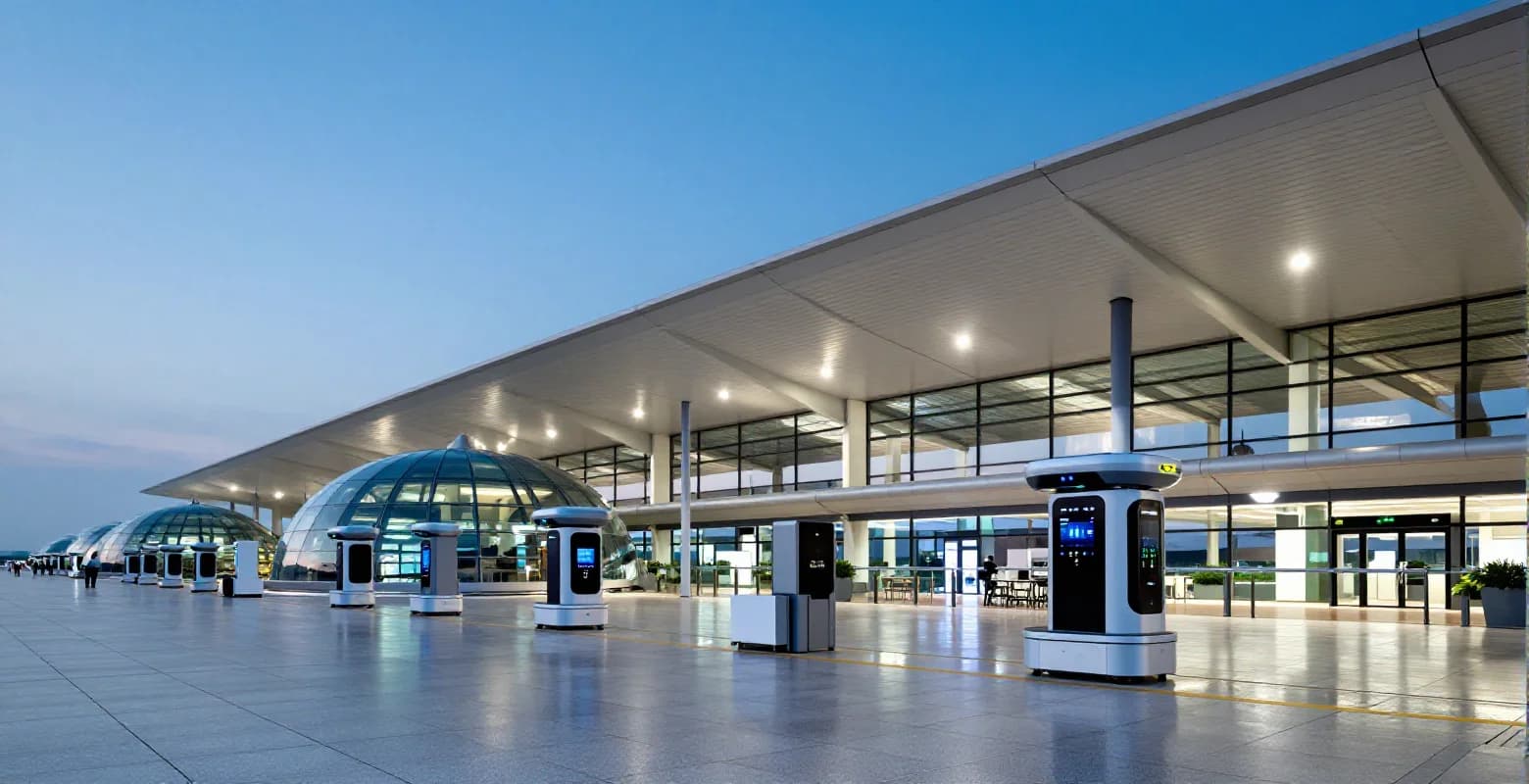
The largest airports in the world are implementing solutions based on artificial intelligence (AI) and machine learning. For example, Dubai Airport uses AI systems to optimize takeoff and landing schedules, reducing delays by 25%. Meanwhile, at Schiphol Airport in Amsterdam, PAL Robotics service robots autonomously transport luggage between terminals, increasing capacity by 30%.
Biometric systems are also a key component. Heathrow Airport in London has introduced iris scanners and facial recognition, reducing passenger check-in time by 40%. This data is processed in the cloud using advanced algorithms, minimizing the risk of errors and enhancing security.
Impact Analysis of Technology on the Industry
- Advantages: - Reduction in passenger handling time by 30-40% thanks to automation. - Decrease in CO₂ emissions through the optimization of ground and air traffic. - Increase in terminal capacity by up to 50% during peak hours.
- Challenges: - High investment costs (e.g., the AI system at Dubai Airport is a $1 billion expenditure). - The need to train staff to work with new technologies. - Risk of cyberattacks on critical IT infrastructure.
- Key Technologies: - Autonomous ground vehicles (AGV). - Predictive maintenance systems. - Big data platforms for analyzing passenger behavior.
- Examples of Applications: - Hamad Airport in Doha: full automation of security checks. - Istanbul Airport: drones delivering documents between terminals.
Prospects and Challenges
The future belongs to “smart” airports, where IoT and 5G will enable instantaneous communication between all elements of infrastructure. However, the industry faces regulatory challenges - e.g., the EU General Data Protection Regulation (GDPR) limits the processing of passenger biometrics. Additionally, crises such as the COVID-19 pandemic have shown that the flexibility of systems is crucial.
According to McKinsey forecasts, by 2030, 70% of airports will use blockchain-based solutions for supply chain management. This opens new possibilities for service personalization, but also requires investments in cybersecurity.
Conclusions
The technological transformation of airports is an inevitable trend that changes not only the comfort of travel but also the business model of the ports. The key to success is balance between innovation and security - both physical and digital. As shown by the example of Singapore's Changi, the integration of advanced solutions can make an airport not only a communication hub but also a tourist magnet. The question is: will the next frontier be full operational autonomy, or will new regulations slow down this technological race?