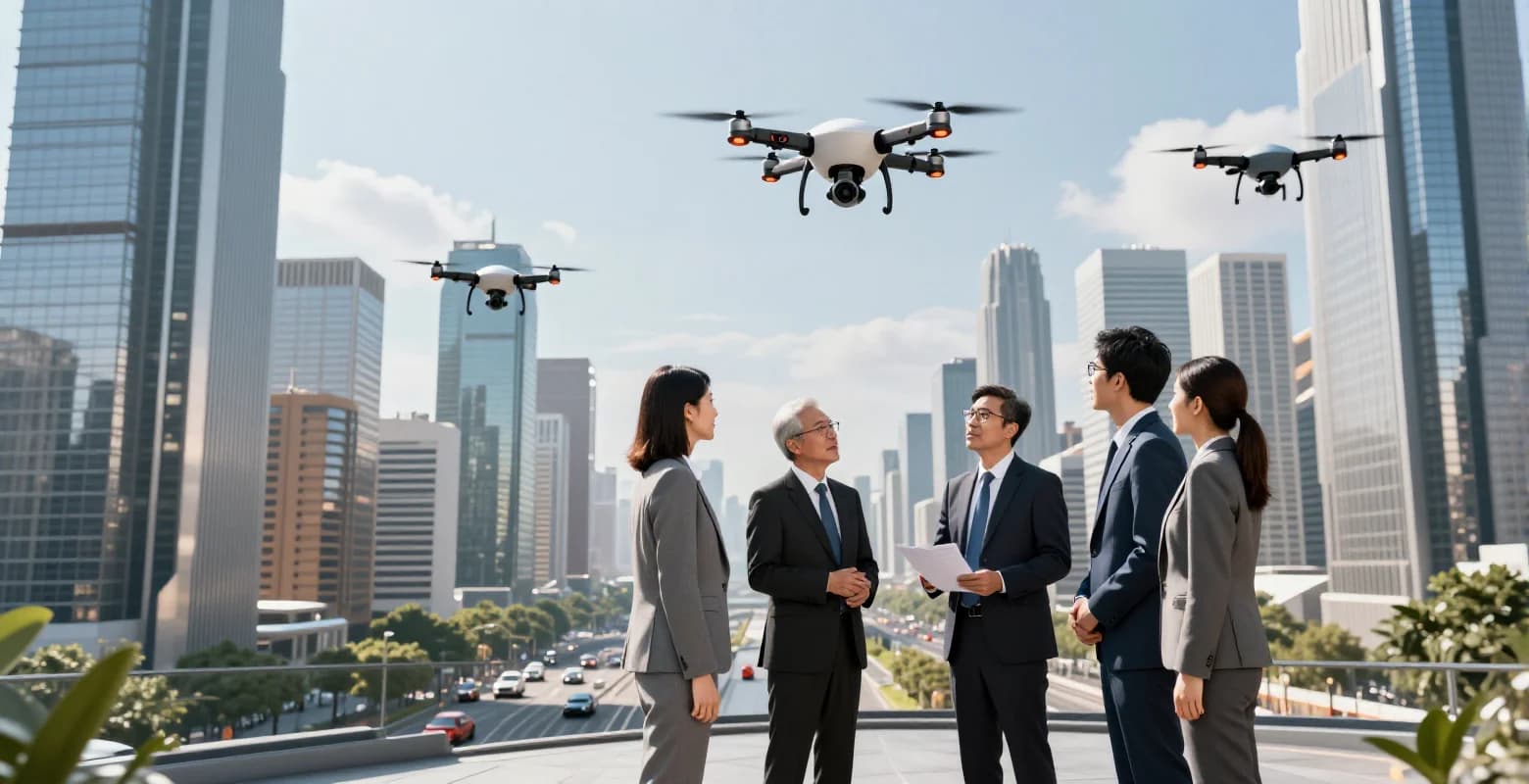
New regulations regarding drone flights in urban spaces: revolution or evolution?
Introduction
Drones, once seen as toys for technology enthusiasts, have become an integral part of the modern urban landscape. Their increasing popularity has forced regulators to introduce new rules aimed at ensuring safety and order in an ever more urbanized airspace. However, do the current regulations keep pace with the rapid development of technology?
According to a report by the Polish Air Navigation Services Agency (PAŻP) from 2023, the number of registered drone operators in Poland has increased by 45% over the past two years. This poses a significant challenge for air traffic control services, which must balance the needs of traditional aviation with new participants in the airspace.
Key changes in regulations
The latest regulation from the Minister of Infrastructure dated March 15, 2024, introduces a number of significant modifications:
- No-fly zones: The list of areas over which drone flights are prohibited has been expanded, including all national parks and nature reserves.
- Operator registration requirement: Every drone user weighing over 250 g must register in a central registry and complete mandatory online training.
- Height restrictions: In cities with more than 100,000 residents, a limit of 50 meters has been introduced for recreational and commercial flights.
- Collision avoidance systems: All drones weighing over 900 g must be equipped with advanced collision avoidance systems (e.g., ADS-B or Lidar).
Particularly controversial is the requirement for mandatory registration, which raises concerns about operator privacy.
Impact analysis on the industry
The new regulations bring both opportunities and challenges:
- Increased safety: PAŻP data indicates that 70% of incidents involving drones result from operator errors. Mandatory training could significantly reduce this risk.
- Innovation brake: Drone manufacturers criticize the height restrictions, claiming they prevent the testing of new technologies (e.g., medical deliveries).
- Service development: Companies offering training and collision avoidance systems report a 120% QoQ increase in demand according to the Polish Chamber of Unmanned Systems.
- Conflicts with birds: Ornithologists warn that a denser network of drones may disrupt bird migrations over cities.
Outlook and challenges
Experts point to several key areas for development:
- Integration with U-space: Poland is one of the leaders in the European Union project concerning digital airspace. New regulations must take these solutions into account.
- Legal issues: Work is underway to amend the Aviation Law to align Polish law with EU directive 2019/…
- Public education: There is a need to increase awareness among urban residents about responsible drone usage.
Conclusions
The new regulations represent a step in the right direction but require ongoing evaluation. The key to success will be finding a balance between safety and innovation - only then can drones become a fully-fledged element of urban transportation infrastructure.