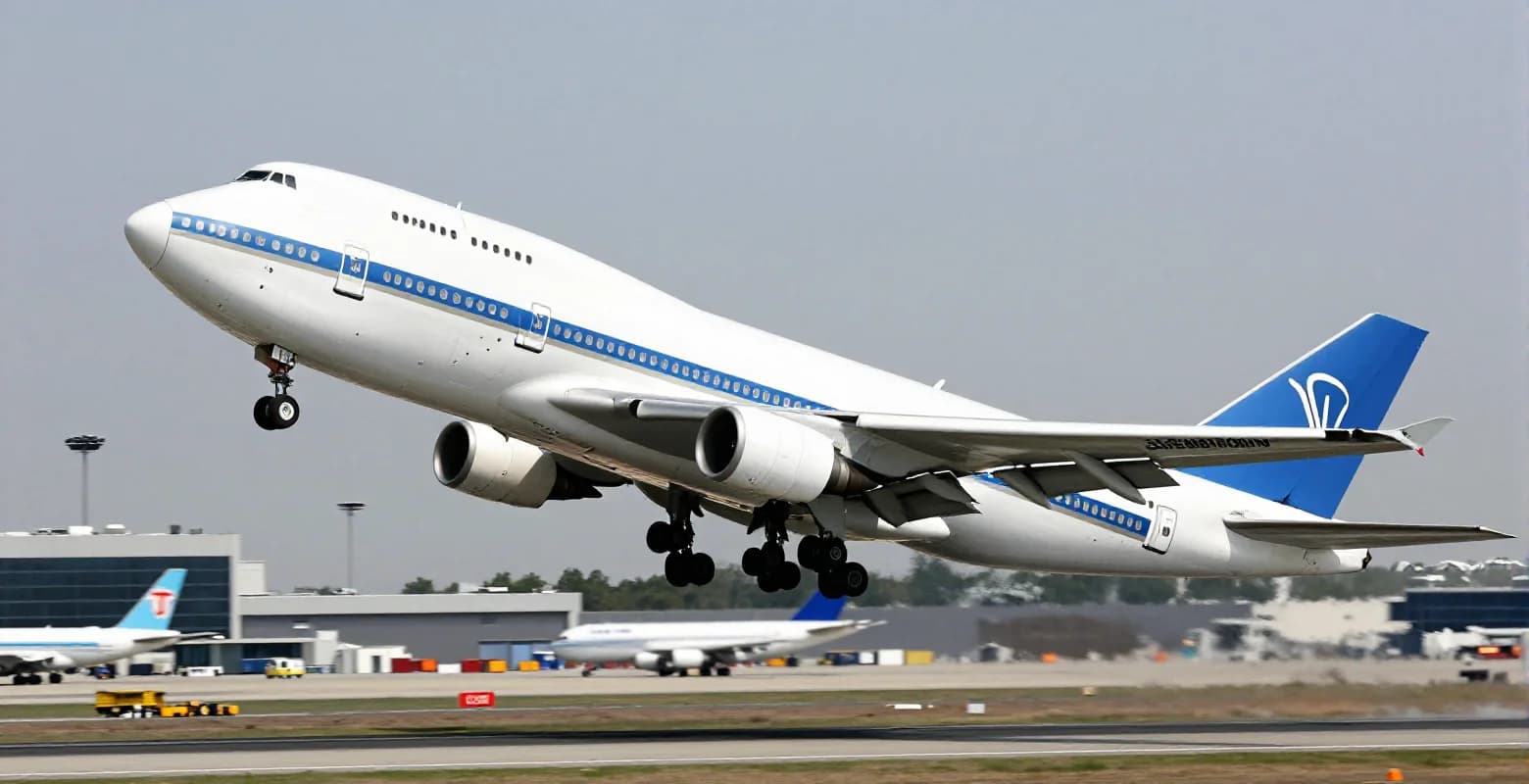
The Story of the Birth of the Boeing 747: An Icon of Commercial Aviation
Introduction
\rThe Boeing 747, also known as the Jumbo Jet, is one of the most recognizable aircraft in the history of commercial aviation. Its introduction to the market in 1969 revolutionized long-distance travel, offering unparalleled capacity and efficiency.
\rThe story of the 747's creation is a fascinating example of technological innovation and business courage. In the 1960s, when the aviation market was dominated by smaller aircraft, Boeing decided to create a machine that could carry more passengers and cargo per flight. This decision changed the face of global air transport.
\r \rOrigins of the Project
\rThe idea of creating a large passenger aircraft was born in response to growing demand for international travel. Airlines like Pan Am were seeking a solution to compete with cheaper sea and rail connections.
\rIn 1964, Boeing began work on the 747 project. A key innovation was placing the engines under the wings, which allowed for a spacious main deck and an additional upper deck. This design provided unprecedented capacity - 416 passengers in a single-class configuration.
\r \rTechnological Challenges and Innovations
\rThe 747 project faced many technical challenges. One of the biggest was designing wings with sufficient span to support the weight of numerous passengers and fuel.
\rAn innovation was the use of modern composite materials and advanced avionics systems. The Boeing 747 was the first aircraft equipped with a fly-by-wire system, ensuring precise control and flight safety.
\rAnother breakthrough was the introduction of a wide body, which allowed for more seats and increased passenger comfort. These solutions made the 747 a symbol of modern aviation.
\r \rImpact on the Aviation Industry
\r- Increased aircraft capacity - The Boeing 747 could carry up to 416 passengers, a record in the 1960s and 1970s. \r
- Development of long-distance networks - Thanks to its fuel efficiency, the 747 allowed airlines to open new intercontinental routes. \r
- Fleet standardization - Many airlines chose to purchase the 747, influencing the standardization of technical maintenance and crew training. \r
- Introduction of business class - The upper deck design enabled the creation of luxurious cabins for business passengers.
Perspectives and Challenges
\rAlthough the Boeing 747 has been replaced by newer models like the 787 Dreamliner, its legacy remains visible in the aviation industry.
\rContemporary challenges include the need to reduce CO₂ emissions and noise. New generations of the 747, such as the cargo version, are still used due to their reliability and payload capacity.
\r \rConclusions
\rThe history of the Boeing 747 shows how technological innovations can transform a market. Its introduction not only revolutionized commercial aviation but also created new opportunities for global mobility.
\rToday, the 747 remains an icon that has inspired generations of aircraft engineers and designers.